

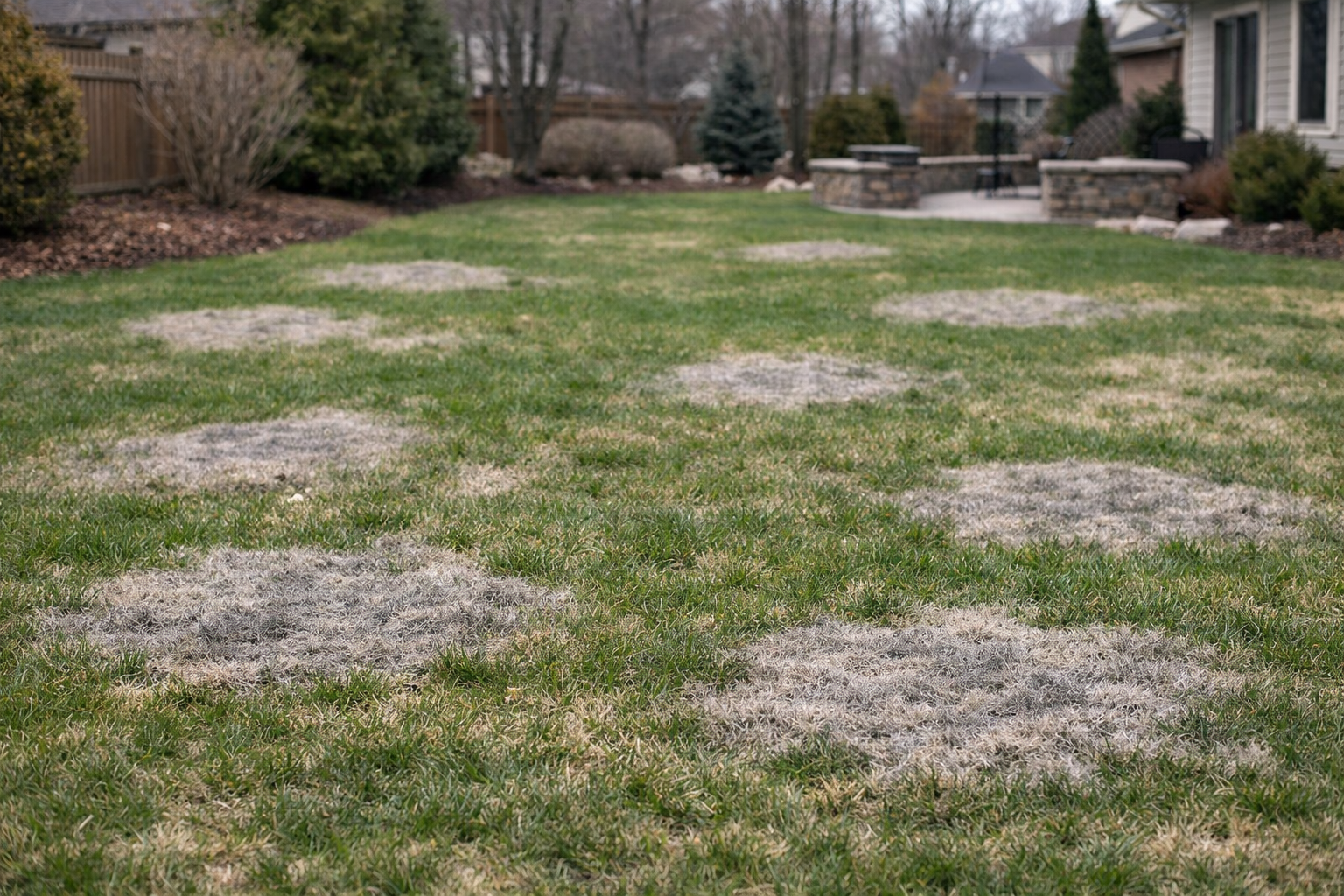
March in Southeast Michigan has a certain honesty to it. The snow pulls back, the gray sky starts to lift, and then there it is—your lawn, laid bare after months of cold, ice, and freeze-thaw punishment. Bare patches, matted-down grass, and soil that feels more like concrete than earth are common sights across Livonia, Plymouth, Canton, and the surrounding communities right now. If that sounds familiar, you're not alone, and more importantly, it's fixable.
Spring lawn repair in MI doesn't require a bag full of synthetic products or a complete lawn replacement. Natural methods, applied at the right time and in the right order, can bring even a badly stressed lawn back to life. Here's what we've learned after nearly three decades of helping Michigan homeowners do exactly that.
Why Michigan Winters Hit Lawns So Hard
Before jumping into solutions, it helps to understand what actually happened out there. Our regional climate creates a specific set of stressors that lawns in warmer parts of the country simply don't face.
Freeze-thaw cycles are one of the biggest culprits. When temperatures swing above and below freezing repeatedly, the soil expands and contracts. This weakens root systems, heaves the soil surface, and creates conditions where grass crowns are especially vulnerable to damage.
Snow mold is another common Michigan issue. When snow sits on grass for extended periods, two types of mold, gray snow mold and pink snow mold, can develop underneath. The result shows up in spring as matted, discolored, or dead-looking circular patches. It's alarming to see, but in many cases, the grass can still recover. Our lawn fungus and disease control services are available for cases where mold damage runs deeper than surface recovery alone can address.
Soil compaction from heavy snow, foot traffic, and frozen ground also takes a toll. Compacted soil restricts the movement of water, oxygen, and nutrients, which means even a healthy-looking lawn may struggle to grow vigorously without some intervention.
When to Begin Spring Lawn Care in Michigan
Timing matters more than most people realize. Starting too early, before soil temperatures reach around 50°F, can do more harm than good. Working on wet, cold soil compacts it further and can damage grass crowns that are still fragile coming out of dormancy.
In the Plymouth and Northville areas, we typically see that window open between late March and mid-April, depending on the year. A simple soil thermometer (available at any garden center) takes the guesswork out of it. Once temperatures are consistently in that 50°F range, the recovery process can begin in earnest.
Step-by-Step Natural Lawn Recovery for Michigan Homeowners
Step 1: Clear Away Debris and Assess the Damage
Walk the yard and remove leaves, branches, and any lingering debris. This allows sunlight and airflow to reach the grass, which is essential for drying out snow mold patches. Gently rake matted areas with a light hand. You're trying to open the grass up, not tear it out.
Take note of where you're seeing:
- Bare or thin spots
- Discolored or gray-matted patches (likely snow mold)
- Areas with poor drainage or standing water
This assessment guides everything that comes next.
Step 2: Dethatching for Better Lawn Recovery in Michigan
Thatch is the layer of dead organic matter that builds up between the soil surface and the grass blades. A thin layer is normal and even beneficial. But when it exceeds about half an inch, it blocks water, nutrients, and air from reaching roots.
Lawn dethatching tips for spring:
- Use a dethatching rake for small areas, or a power dethatcher for larger lawns
- Dethatch when grass is beginning to green up but before peak growth begins
- Remove the loosened material completely rather than leaving it on the lawn
- Avoid dethatching if the lawn is already heavily stressed or very thin
Dethatching isn't something every lawn needs every year. If your grass has been relatively healthy and you haven't seen water runoff or compaction issues, you may only need it every two to three years. But after the kind of winter Southeast Michigan just came through, it's worth checking.
Step 3: Address Soil Compaction with Liquid Aeration
Traditional core aeration is effective, but liquid aeration has become a popular and highly efficient alternative for spring recovery. It penetrates the soil profile without mechanical disruption, making it a strong option when the ground is still recovering from frost. You can read more about how this process works in our overview of lawn aeration benefits for Michigan homeowners.
Our professional aeration services work by breaking down compacted soil particles, improving pore space for oxygen, water, and root penetration. For lawns in the Canton and Novi areas where clay-heavy soils are common, this step can make a significant difference in how quickly the grass responds to everything else you do.
Step 4: Overseed the Bare and Thin Spots Naturally
Once the soil is loosened and debris is cleared, overseeding is the most effective natural repair method for bare patches. For lawn recovery in Michigan, we recommend:
- Lightly scratch the bare area with a rake to expose the soil
- Apply a quality cool-season grass seed blend suited to Michigan conditions (Kentucky bluegrass, perennial ryegrass, or fine fescue mixes work well here)
- Topdress with a thin layer of compost to retain moisture and support germination
- Keep the area consistently moist for two to three weeks
Our blog post on spring overseeding to correct bare patches goes deeper into seed selection and timing if you'd like additional guidance. For larger damaged areas, slit seeding places seed directly into the soil for better seed-to-soil contact and significantly higher germination rates, making it one of the most reliable recovery options we offer.
Step 5: Feed the Soil, Not Just the Grass
Natural lawn recovery depends heavily on soil health. A soil test in early spring can tell you exactly what your lawn is missing, so you're not guessing at what to apply. Organic-based lawn fertilization applied after soil temperatures warm up supports slow, steady growth rather than the burst-and-crash cycle that synthetic quick-release products can create. For more on building an effective feeding schedule, our post on early fertilization planning in Michigan is a helpful starting point.
A simple overview of what your spring soil program should support:
| Soil Need | Natural Approach |
| Low nitrogen | Slow-release organic fertilizer |
| Poor drainage | Liquid aeration + compost topdress |
| pH imbalance | Lime application (based on soil test) |
| Weak root zone | Overseeding + reduced foot traffic |

Repairing Your Lawn This Spring Without the Guesswork
Natural spring lawn repair in MI is entirely achievable with patience, the right sequence of steps, and an understanding of what Michigan soils and grasses specifically need. The lawns we see recover best every spring are the ones where owners take time in March and April to assess first, act second, and stay consistent through the early growing season.
If you'd like a professional set of eyes on your lawn before the growing season kicks in, our team offers spring evaluations and natural recovery services throughout the region. Learn more about our experience and approach or read about our full lawn care services to see how we support Southeast Michigan properties year-round. You can also check our local reputation as a trusted Spring lawn care provider in Livonia or give us a call at (734) 600-9161 to schedule a visit. A healthier lawn this summer starts with the decisions you make right now.